Mice & Rats in the Triangle
Rodent infestations are a year-round problem in the Raleigh-Triangle area, but activity increases dramatically in fall and winter as mice and rats seek warmth and food inside your home. House mice and Norway rats are the most common species, though roof rats are also present in some neighborhoods. Even a small rodent problem can escalate quickly — a single pair of mice can produce up to 60 offspring per year.

Signs of a Rodent Infestation
Rodents are nocturnal and secretive, so you may have an infestation before you ever see a mouse or rat. Look for these warning signs:
- Droppings — mouse droppings are rice-grain sized (1/4 inch), rat droppings are larger (1/2 to 3/4 inch). Found along walls, in cabinets, and near food sources
- Scratching sounds at night in walls, ceilings, or under floors
- Gnaw marks on food packaging, baseboards, or wiring
- Greasy rub marks along baseboards and walls where rodents travel repeatedly
- Nesting material — shredded paper, insulation, or fabric tucked into hidden areas
- Musty, ammonia-like odor from urine, especially in enclosed spaces
Mouse vs. Rat Droppings
Correctly identifying whether you have mice or rats determines the removal approach. Mouse droppings are small, pointed at both ends, and often scattered randomly. Rat droppings are much larger, blunt at the ends, and typically found in concentrated areas along travel routes. If you're unsure, a professional wildlife inspection can identify the species and scope of the problem.
Health Risks
Rodents carry diseases including hantavirus, salmonella, and leptospirosis. Their droppings and urine contaminate insulation, stored items, and can affect indoor air quality. Rodents also chew electrical wires, creating fire hazards similar to squirrels.
Rodent Removal & Exclusion
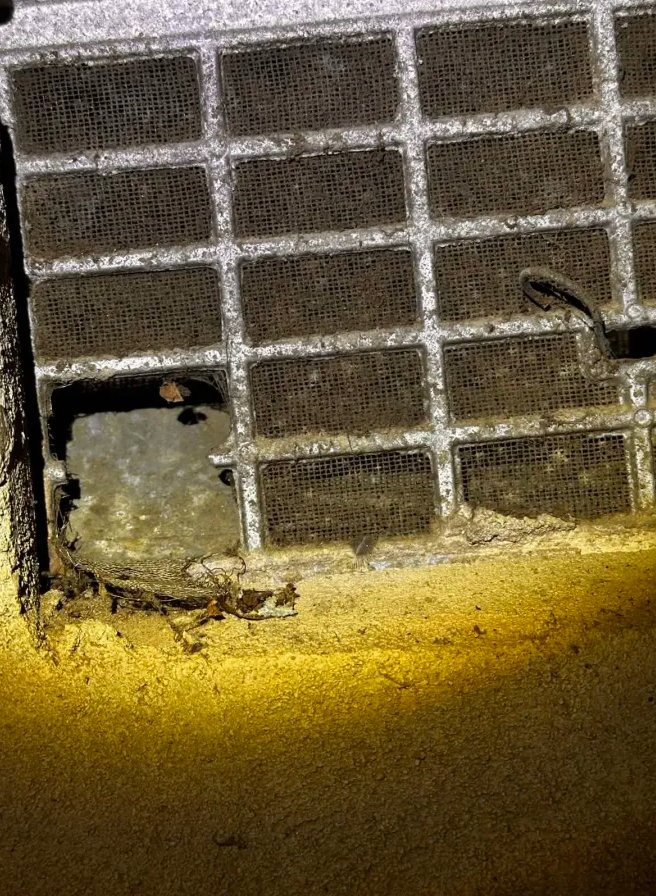
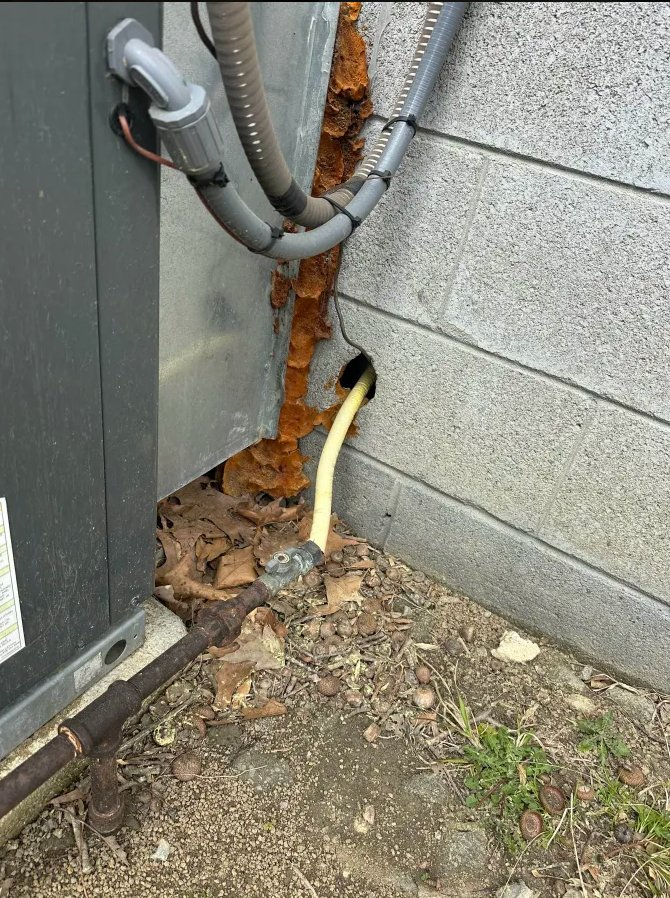
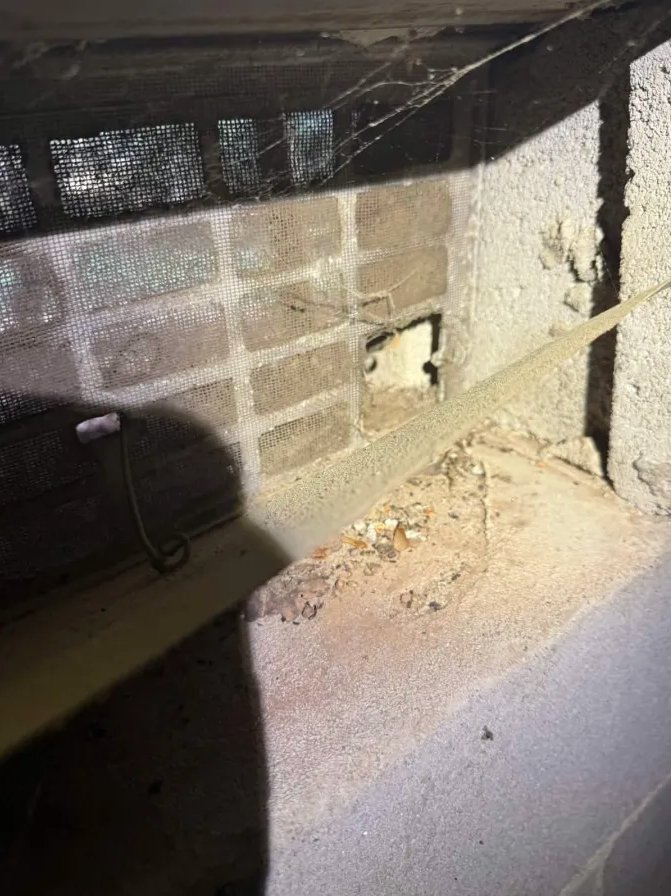
Trapping alone doesn't solve a rodent problem — if entry points aren't sealed, new rodents will replace the ones you remove. Our approach combines targeted trapping with complete exclusion, sealing every gap larger than 1/4 inch for mice or 1/2 inch for rats. We focus especially on crawlspace vents, foundation gaps around utilities, and gaps at the roofline.