Why Droppings Identification Matters
Finding droppings in your home is usually the first sign of a rodent problem. But different rodents require different removal approaches — the traps, bait, placement, and exclusion methods for mice are different from those for rats, which are different from squirrels. Correctly identifying the droppings tells you exactly what you're dealing with and how to solve it.
Mouse Droppings
Mouse droppings are the smallest and most commonly found rodent droppings in homes. Key characteristics:
- Size: Small, about 1/4 inch long (roughly the size of a grain of rice)
- Shape: Pointed at both ends, slightly curved
- Color: Dark brown or black when fresh, turning gray and crumbly as they age
- Location: Scattered randomly along travel paths — inside kitchen cabinets, under sinks, along baseboards, behind appliances, and in pantries
- Quantity: A single mouse produces 50-75 droppings per day, so finding a large number of small droppings is a strong indicator of mice
Mouse droppings are often found in a scattered pattern because mice leave droppings continuously as they travel, rather than using a specific latrine area.

Rat Droppings
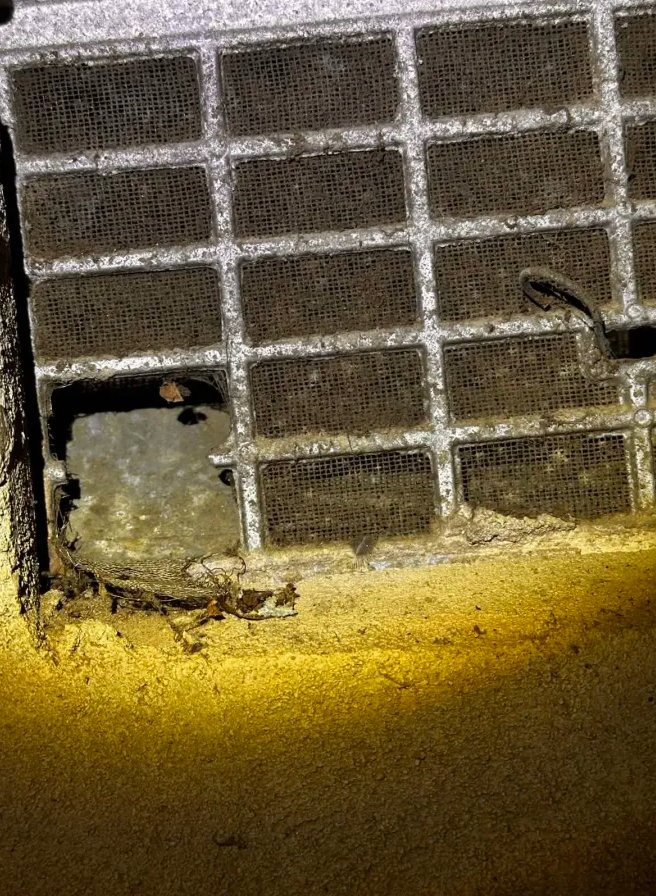
Rat droppings are significantly larger than mouse droppings and are found in different locations depending on the rat species:
- Size: 1/2 to 3/4 inch long — noticeably larger than mouse droppings
- Shape: Blunt or rounded at the ends (unlike the pointed ends of mouse droppings), capsule-shaped
- Color: Dark brown or black when fresh, becoming lighter and chalky over time
- Location: Found in concentrated groups along walls, in corners, and near food sources. Norway rats leave droppings near ground level (crawlspaces, basements). Roof rats leave them in attics and upper levels.
- Quantity: Rats produce about 40-50 droppings per day, usually in a few concentrated spots rather than scattered
Squirrel Droppings
Squirrel droppings are often confused with rat droppings because they're similar in size. Here's how to tell them apart:
- Size: About 3/8 inch long — slightly smaller than rat droppings
- Shape: Barrel-shaped or oblong with rounded ends, slightly thicker in the middle
- Color: Reddish-brown or dark brown, lighter than rat droppings
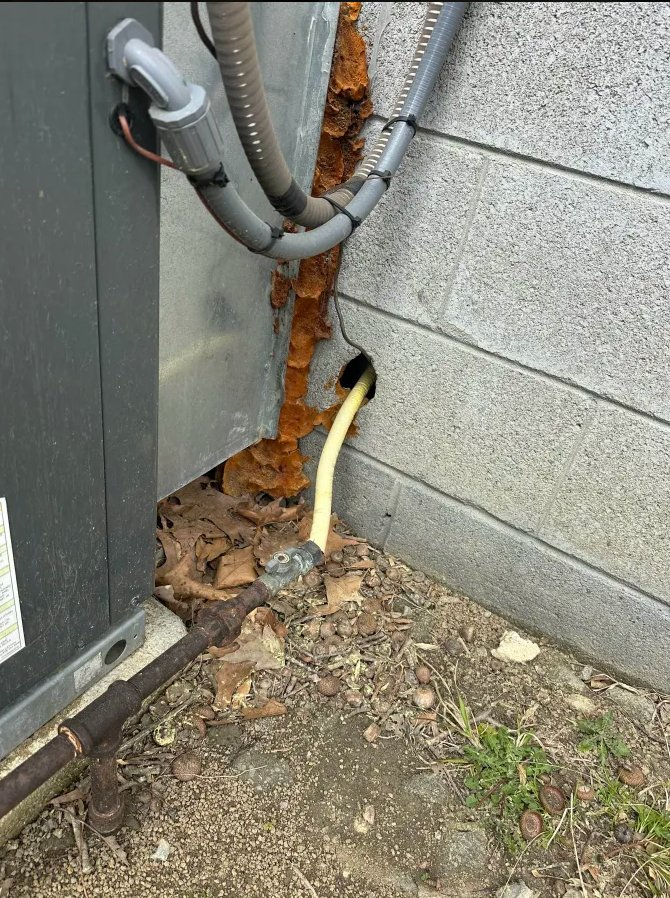
- Location: Almost always found in attics, near entry points, and in nesting areas. If you're finding droppings of this size in an attic with daytime scratching sounds, it's almost certainly squirrels.
- Key difference from rat droppings: Squirrel droppings are found at the roofline and in attics, while rat droppings at that size are typically found at ground level or in crawlspaces. The location is the most reliable way to distinguish them.
Bat Droppings (Guano)
Bat droppings are sometimes confused with mouse droppings due to their similar size. The key differences:
- Size: Similar to mouse droppings — about 1/4 inch
- Key difference: Bat guano crumbles easily and has a sparkly appearance when crushed due to insect exoskeletons in their diet. Mouse droppings are more solid and don't sparkle.
- Location: Found in piles directly below roosting spots — under gable vents, along attic walls, or on porches below eave entry points
- Health risk: Bat guano can harbor Histoplasma capsulatum, a fungus that causes histoplasmosis. Do not sweep or vacuum large accumulations without proper protection.
Fresh vs. Old Droppings
Determining whether droppings are fresh or old tells you if the infestation is active:
- Fresh droppings — dark, moist, and soft. If you're finding fresh droppings regularly, you have an active infestation.
- Old droppings — dried out, gray or chalky, crumble when touched. Old droppings alone may indicate a past problem that's been resolved, but should still prompt an inspection to verify.
Safety First
Never handle rodent or bat droppings with bare hands. Wear gloves and a dust mask, and avoid sweeping which can make particles airborne. For large accumulations, especially bat guano, professional cleanup with HEPA equipment is recommended.
What to Do If You Find Droppings
Finding droppings means something is living in your home. The next step is identifying the entry points — because without sealing those, new animals will replace the ones you remove. A professional wildlife inspection identifies both the species and how they're getting in, so the problem can be solved permanently.