How to Tell If You Have Raccoons in Your Attic
Raccoons are one of the most destructive animals that can invade your attic. Unlike squirrels (which weigh 1-2 pounds), an adult raccoon weighs 15-40 pounds — and they can cause damage proportional to their size. If you suspect raccoons in your attic, acting quickly can save you thousands of dollars in damage and health-related cleanup costs.
Signs of Raccoons in Your Attic
Raccoons are nocturnal, so the first sign is usually sounds at night:
- Heavy thumping and walking sounds — raccoons are heavy enough that you'll hear distinct footsteps, not just scratching. This is the most common way homeowners discover a raccoon in the attic. The sound is much louder and heavier than squirrel or mouse activity.
- Vocal sounds — raccoons chitter, growl, and purr. Baby raccoons (kits) make a distinctive high-pitched crying sound, especially at night when the mother leaves to forage.
- Large droppings — raccoon feces are similar in size to small dog droppings, often found in a concentrated "latrine" area. This is very different from the scattered small droppings of mice or the pellet-like droppings of squirrels.
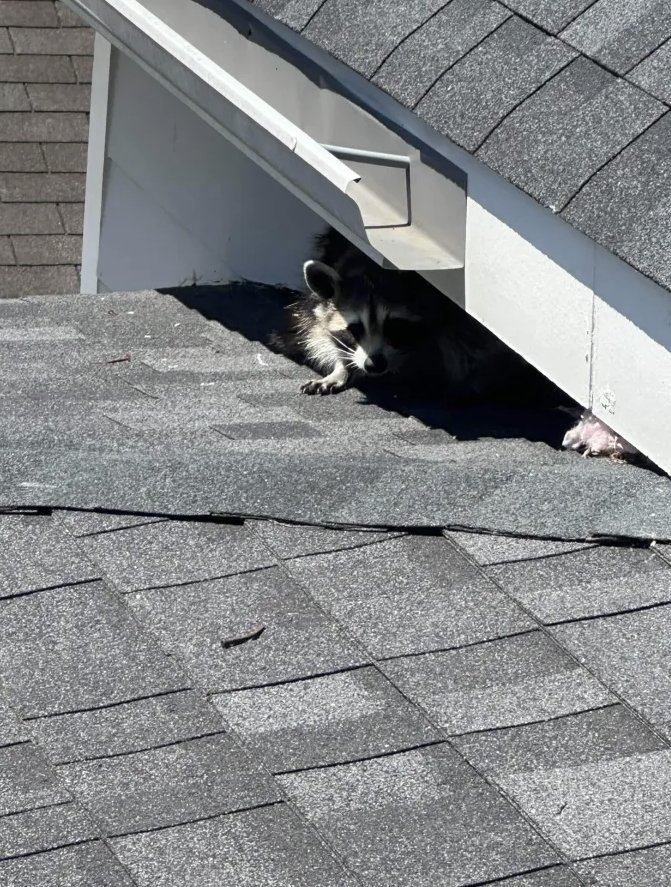
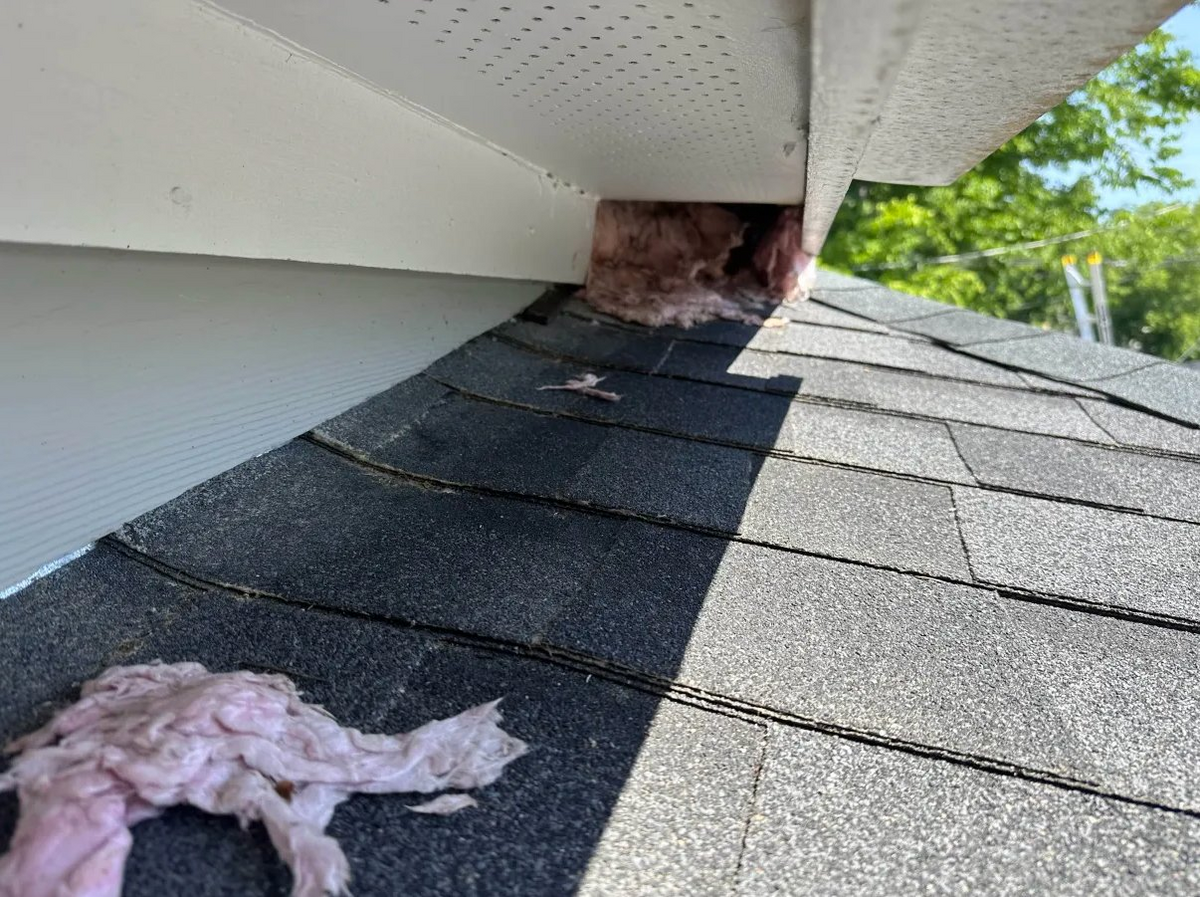
- Visible damage to the exterior — raccoons tear through soffit panels, rip off vent covers, and can pry apart roofing at weak points. The damage is typically larger and more ragged than squirrel chew marks.
- Torn insulation and ductwork — raccoons flatten insulation by bedding down in it and may tear apart flexible HVAC ducts.
Are Raccoons in the Attic Dangerous?
Yes — raccoons in your attic create several serious hazards:
- Raccoon roundworm (Baylisascaris) — raccoon feces can contain eggs of this parasitic roundworm. If accidentally inhaled or ingested (which can happen when dried feces become airborne dust), it can cause severe neurological damage in humans. This is especially dangerous for children.
- Rabies — raccoons are one of the primary rabies vector species in North Carolina. While most raccoons are not rabid, any direct contact should be avoided.
- Structural damage — raccoons tear apart insulation, damage ductwork, stain ceilings with urine, and compromise the structural integrity of soffit and fascia.
- Electrical hazards — like squirrels, raccoons may chew wiring, creating fire risks.
- Secondary pests — raccoons carry fleas, ticks, and mites that can migrate into living spaces.
How Raccoons Get Into Your Attic
Raccoons are strong and dexterous. They commonly enter attics through:
- Roof returns — the gap where the roof meets the soffit at corners. This is the most common raccoon entry point in Triangle-area homes.
- Soffit panels — raccoons can pry apart or tear through aluminum and vinyl soffit.
- Gable vents — they push through or tear the vent screens.
- Chimneys — uncapped chimneys are an open door. Female raccoons commonly use chimneys as birthing dens. See our chimney wildlife removal service.
- Damaged roofing — any existing roof damage or soft spot gets exploited quickly.
How Much Does Raccoon Removal Cost?
The cost of raccoon removal depends on the scope of the problem — how many raccoons, where they're located, how much damage has occurred, and what exclusion work is needed. We provide a detailed assessment and quote after our initial inspection. In general, the cost increases significantly the longer raccoons are allowed to remain, so early action saves money.
Our Raccoon Removal Process
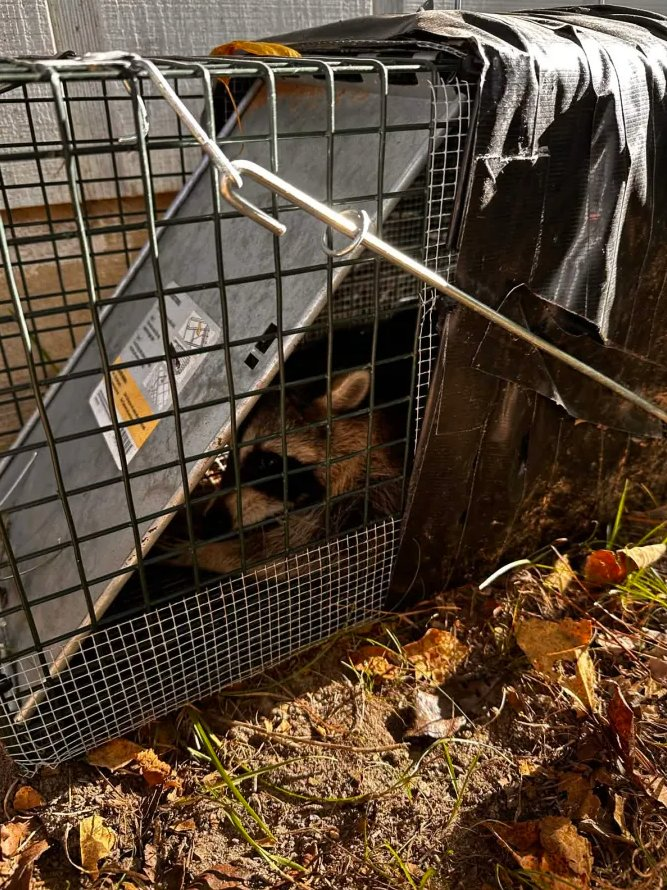
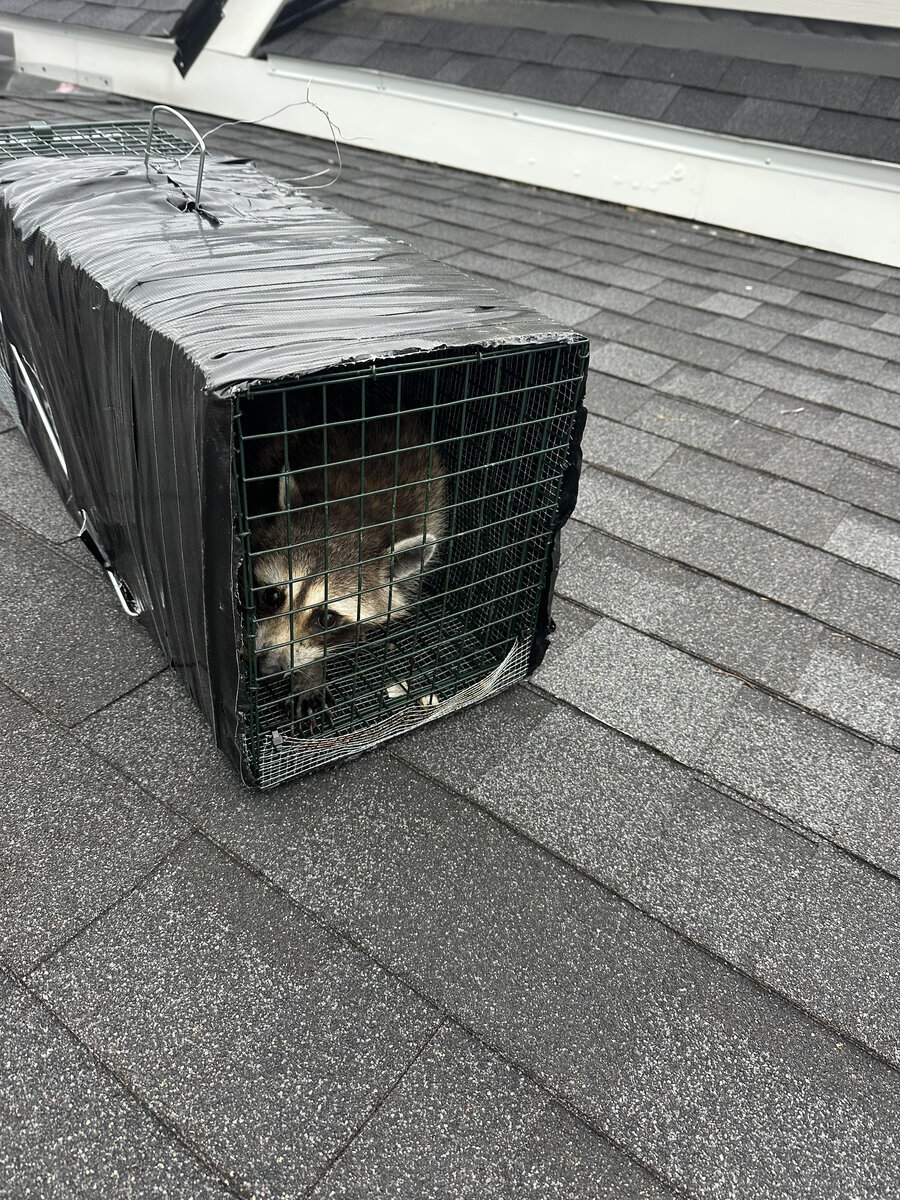
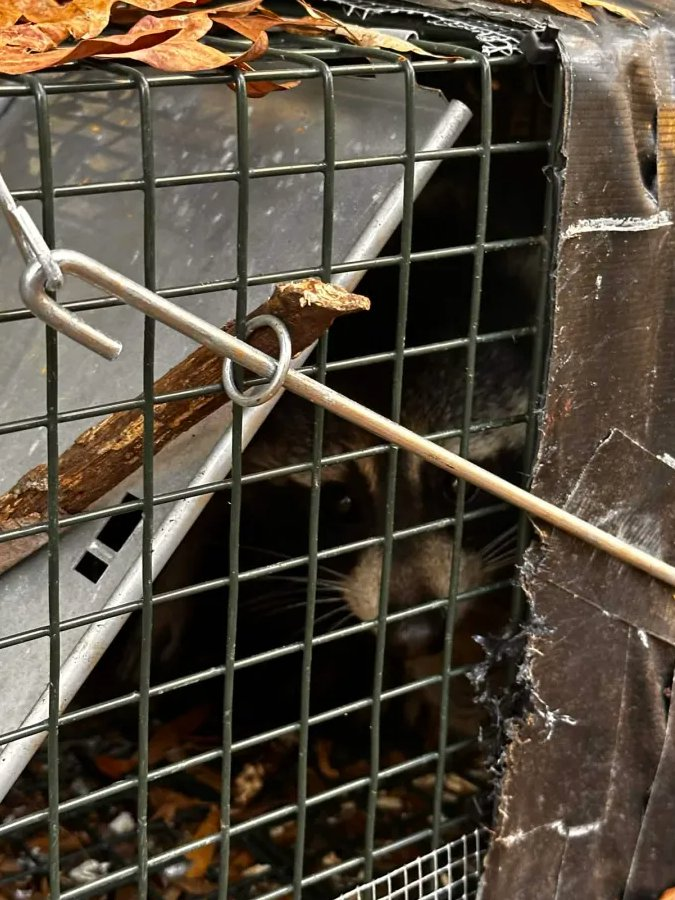
Rapid Wildlife Removal uses humane live-cage traps placed at confirmed entry points. After all raccoons are removed (including any kits), we seal every entry point with heavy-gauge, raccoon-proof materials. We then assess the attic for damage and recommend attic restoration services as needed — including droppings cleanup, insulation replacement, and sanitization.
Can I Remove Raccoons Myself?
We strongly advise against DIY raccoon removal. Raccoons can be aggressive when cornered, especially mothers with kits. They carry rabies and raccoon roundworm, both of which pose serious health risks. Additionally, trapping and relocating raccoons in North Carolina requires compliance with state wildlife regulations. Professional removal ensures the job is done safely, humanely, and legally.